3D postural analysis for podiatrists
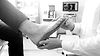
Podiatry focuses on plantar support, gait, balance and the functional impact of the foot on the body as a whole. In a podiatry practice, a postural assessment makes it possible to observe how support, pelvic position, body asymmetries and spinal alignment may interact in a patient in standing position.
In podiatry, POSCAN ONE complements the assessment with a global 3D visualization of posture, plantar support, the pelvis, spine and lower limbs. It helps explain orthopedic insoles, document visible asymmetries and monitor the patient over time.
In podiatry, POSCAN ONE complements the assessment with a global 3D visualization of posture, plantar support, the pelvis, spine and lower limbs. It helps explain orthopedic insoles, document visible asymmetries and monitor the patient over time.
Why integrate 3D postural analysis into a podiatry practice?
The foot is a major entry point in postural balance. Plantar support can influence pelvic position, spinal compensations, shoulder orientation and certain body adaptations visible in standing position. Conversely, a global postural asymmetry may also affect support and load distribution at plantar level.
The podiatry examination can be enriched by observing the spine, pelvis and global body asymmetries. Differences in support, pelvic tilt, body rotation or trunk compensation can be documented visually and integrated into the overall assessment.
In podiatry, POSCAN ONE complements the assessment with a global 3D visualization of posture, plantar support, the pelvis, spine and lower limbs. It helps explain orthopedic insoles, document visible asymmetries and monitor the patient over time.

Postural assessment and plantar support: a complementary approach
In podology, plantar pressure analysis is often closely linked to the assessment of global posture. Foot support disorders, load asymmetries, rotations, and pelvic imbalances can all be part of a wider postural pattern.
POSCAN ONE allows podologists to document the patient’s posture and, depending on the configuration used, combine this 3D observation with baropodometric analysis. This provides a more complete understanding of the patient: plantar support and pressure distribution on one side, and the overall organisation of the body in standing position on the other.
This approach is particularly useful for:
-
initial podological assessments;
-
complete postural assessments;
-
follow-up before and after orthopaedic insoles;
-
analysis of postural compensations;
-
monitoring of functional pain;
-
multidisciplinary care with physiotherapists, osteopaths, physicians, or orthopaedic/prosthetic specialists.
The 3D postural assessment becomes a valuable support for documentation and patient education. It helps patients visualise what is being observed, understand the logic behind the treatment plan, and follow their evolution over time.

Podiatric assessment
initial

Postural assessment
complete

Follow up
Before/After

Analysis of bodily compensations

Monitoring of
functional pain

Multidisciplinary support
In podology, plantar pressure analysis is often closely linked to the assessment of global posture. Foot support disorders, load asymmetries, rotations, and pelvic imbalances can all be part of a wider postural pattern.
POSCAN ONE allows podologists to document the patient’s posture and, depending on the configuration used, combine this 3D observation with baropodometric analysis. This provides a more complete understanding of the patient: plantar support and pressure distribution on one side, and the overall organisation of the body in standing position on the other.
This approach is particularly useful for:
-
initial podological assessments;
-
complete postural assessments;
-
follow-up before and after orthopaedic insoles;
-
analysis of postural compensations;
-
monitoring of functional pain;
-
multidisciplinary care with physiotherapists, osteopaths, physicians, or orthopaedic/prosthetic specialists.
The 3D postural assessment becomes a valuable support for documentation and patient education. It helps patients visualise what is being observed, understand the logic behind the treatment plan, and follow their evolution over time.

A visual aid to explain orthotic insoles
In podiatry, POSCAN ONE complements the assessment with a global 3D visualization of posture, plantar support, the pelvis, spine and lower limbs. It helps explain orthopedic insoles, document visible asymmetries and monitor the patient over time, without replacing the podiatrist’s clinical examination or professional interpretation.
Analysis of the spine, pelvis and postural asymmetries
A podological examination can be enhanced by observing the spine, pelvis, and overall body asymmetries. Differences in plantar support, pelvic tilt, body rotation, or trunk compensation can be valuable elements to document during a postural assessment.
POSCAN ONE provides a 3D visualisation of the patient’s posture. The practitioner can observe alignments, right/left differences, anatomical landmarks, and postural variations in standing position. This helps build a clearer understanding of the patient’s global postural organisation.
For podologists, this information can support a wide range of situations, including:
-
patients with recurrent pain;
-
suspected postural compensations;
-
differences in plantar support;
-
follow-up of orthopaedic insoles;
-
complementary postural assessment;
-
communication with other healthcare professionals.
POSCAN ONE does not provide an automated medical diagnosis. It supports the practitioner’s clinical observation and helps document the visible elements identified during the assessment.
A podological examination can be enhanced by observing the spine, pelvis, and overall body asymmetries. Differences in plantar support, pelvic tilt, body rotation, or trunk compensation can be valuable elements to document during a postural assessment.
POSCAN ONE provides a 3D visualisation of the patient’s posture. The practitioner can observe alignments, right/left differences, anatomical landmarks, and postural variations in standing position. This helps build a clearer understanding of the patient’s global postural organisation.
For podologists, this information can support a wide range of situations, including:
-
patients with recurrent pain;
-
suspected postural compensations;
-
differences in plantar support;
-
follow-up of orthopaedic insoles;
-
complementary postural assessment;
-
communication with other healthcare professionals.
POSCAN ONE does not provide an automated medical diagnosis. It supports the practitioner’s clinical observation and helps document the visible elements identified during the assessment.
A podological examination can be enhanced by observing the spine, pelvis, and overall body asymmetries. Differences in plantar support, pelvic tilt, body rotation, or trunk compensation can be valuable elements to document during a postural assessment.
POSCAN ONE provides a 3D visualisation of the patient’s posture. The practitioner can observe alignments, right/left differences, anatomical landmarks, and postural variations in standing position. This helps build a clearer understanding of the patient’s global postural organisation.
For podologists, this information can support a wide range of situations, including:
-
patients with recurrent pain;
-
suspected postural compensations;
-
differences in plantar support;
-
follow-up of orthopaedic insoles;
-
complementary postural assessment;
-
communication with other healthcare professionals.
POSCAN ONE does not provide an automated medical diagnosis. It supports the practitioner’s clinical observation and helps document the visible elements identified during the assessment.


Baropodometry and 3D postural analysis
Baropodometry is used to analyse plantar pressure distribution. In podology, it helps identify support zones, overload areas, asymmetries, and balance patterns. When combined with 3D postural analysis, it provides a clearer link between foot support and the global organisation of the body.
POSCAN ONE can be integrated into a combined approach that brings together posture and plantar pressure analysis. This gives the podologist a more complete understanding of the patient, including:
-
pressure distribution under the feet;
-
right/left balance;
-
pelvic posture;
-
spinal alignment;
-
visible body asymmetries;
-
changes observed before and after orthopaedic insoles.
The goal is not to add unnecessary measurements, but to make the assessment clearer, more structured, and more meaningful. For the patient, the visual report makes it easier to understand the connection between foot support and posture. For the practitioner, it supports follow-up, documentation, and comparison over time.
Baropodometry is used to analyse plantar pressure distribution. In podology, it helps identify support zones, overload areas, asymmetries, and balance patterns. When combined with 3D postural analysis, it provides a clearer link between foot support and the global organisation of the body.
POSCAN ONE can be integrated into a combined approach that brings together posture and plantar pressure analysis. This gives the podologist a more complete understanding of the patient, including:
-
pressure distribution under the feet;
-
right/left balance;
-
pelvic posture;
-
spinal alignment;
-
visible body asymmetries;
-
changes observed before and after orthopaedic insoles.
The goal is not to add unnecessary measurements, but to make the assessment clearer, more structured, and more meaningful. For the patient, the visual report makes it easier to understand the connection between foot support and posture. For the practitioner, it supports follow-up, documentation, and comparison over time.
Baropodometry is used to analyse plantar pressure distribution. In podology, it helps identify support zones, overload areas, asymmetries, and balance patterns. When combined with 3D postural analysis, it provides a clearer link between foot support and the global organisation of the body.
POSCAN ONE can be integrated into a combined approach that brings together posture and plantar pressure analysis. This gives the podologist a more complete understanding of the patient, including:
-
pressure distribution under the feet;
-
right/left balance;
-
pelvic posture;
-
spinal alignment;
-
visible body asymmetries;
-
changes observed before and after orthopaedic insoles.
The goal is not to add unnecessary measurements, but to make the assessment clearer, more structured, and more meaningful. For the patient, the visual report makes it easier to understand the connection between foot support and posture. For the practitioner, it supports follow-up, documentation, and comparison over time.
A clear PDF report for the patient file
After the assessment, POSCAN ONE can generate a structured report. This document may be given to the patient or kept in the practice file. It provides a record of the assessment and facilitates comparison during subsequent consultations.
For a podiatrist, the PDF report offers several advantages:
better traceability of the postural assessment;
an explanatory aid for the patient;
a useful document for insole follow-up;
a basis for comparison between several consultations;
easier communication with other healthcare professionals.
This report can also enhance the value of the assessment. The patient leaves with a clear, visual and understandable document, reinforcing the perceived quality and professionalism of the practice.

Practical applications for a podiatry practice
POSCAN ONE can be used in many situations encountered in a podiatry practice.

During the first consultation, the 3D postural scan complements the clinical examination with a global observation of the patient in standing position. It helps document visible asymmetries, imbalances, support, pelvic position and spinal alignment.
Before and after the fitting of orthotics, POSCAN ONE allows observation of the patient's postural evolution. This comparison can help explain the changes and adapt the follow-up care.
Combining postural observation with support analysis helps clarify interactions between the foot, pelvis and spine. This global approach enriches the podiatry assessment.
In some patients with recurrent pain, lower back pain, neck pain or functional disorders, postural assessment can provide useful additional documentation for monitoring.
The report can also be shared, when relevant, with other professionals involved in the patient’s care pathway, such as a physiotherapist, osteopath, sports physician, orthopaedic/prosthetic specialist, or referring physician.
Benefits for podiatrists
Integrating POSCAN ONE into a podiatry practice helps enhance the perceived quality of the assessment and improves communication with the patient. The practitioner has a modern, quick-to-use visual aid suited to daily clinical practice.
The main benefits for the practice are substantial. POSCAN ONE enhances the podiatry assessment through a global observation, helps document plantar support, the pelvis and the spine, makes orthopedic insoles easier to explain, supports patient follow-up over time, highlights the podiatrist’s expertise and differentiates the practice through visual technology.
The 3D postural assessment can therefore become a differentiating element in the patient experience, while remaining a complementary tool to the podiatrist’s clinical reasoning.
POSCAN ONE: a solution designed for modern podiatry
Patients today expect clear explanations, visual aids and a better understanding of their care pathway. In podiatry, this expectation is particularly strong when orthopedic insoles are proposed, adjusted or renewed.
POSCAN ONE meets this need by providing a fast, reproducible visual observation tool. The practitioner can perform a postural assessment in a few minutes, generate a report and monitor the patient’s progress over time.
In podiatry, POSCAN ONE complements the assessment with a global 3D visualization of posture, plantar support, the pelvis, spine and lower limbs. It helps explain orthopedic insoles, document visible asymmetries and monitor the patient over time.
Postural analysis, podiatry and patient follow-up
In podology, postural assessment can be integrated into a comprehensive approach combining plantar pressure analysis, global posture assessment, spinal observation, pelvic position, and follow-up of orthopaedic insoles.
This approach is designed for podologists who want to better document the links between the foot, posture, balance, and functional disorders. 3D postural analysis adds a clear, reproducible visual dimension to the podological assessment, supporting patient follow-up and multidisciplinary communication.
POSCAN ONE supports this global approach to postural observation. It helps practitioners enrich their assessment, document the relationship between plantar support, the pelvis, and the spine, and monitor changes over time. Used as a complement to the clinical examination, the 3D postural scan provides a valuable visual tool to explain, compare, and enhance podological follow-up.
Why integrate 3D postural analysis into a podiatry practice?
The foot is a major entry point in postural balance. Plantar support can influence pelvic position, spinal compensations, shoulder orientation and certain body adaptations visible in standing position. Conversely, a global postural asymmetry may also affect support and load distribution at plantar level.
The podiatry examination can be enriched by observing the spine, pelvis and global body asymmetries. Differences in support, pelvic tilt, body rotation or trunk compensation can be documented visually and integrated into the overall assessment.
In podiatry, POSCAN ONE complements the assessment with a global 3D visualization of posture, plantar support, the pelvis, spine and lower limbs. It helps explain orthopedic insoles, document visible asymmetries and monitor the patient over time.
Postural assessment and plantar support: a complementary approach
In podology, plantar pressure analysis is often closely linked to the assessment of global posture. Foot support disorders, load asymmetries, rotations, and pelvic imbalances can all be part of a wider postural pattern.
POSCAN ONE allows podologists to document the patient’s posture and, depending on the configuration used, combine this 3D observation with baropodometric analysis. This provides a more complete understanding of the patient: plantar support and pressure distribution on one side, and the overall organisation of the body in standing position on the other.
This approach is particularly useful for:
-
initial podological assessments;
-
complete postural assessments;
-
follow-up before and after orthopaedic insoles;
-
analysis of postural compensations;
-
monitoring of functional pain;
-
multidisciplinary care with physiotherapists, osteopaths, physicians, or orthopaedic/prosthetic specialists.
The 3D postural assessment becomes a valuable support for documentation and patient education. It helps patients visualise what is being observed, understand the logic behind the treatment plan, and follow their evolution over time.
A visual aid to explain orthotic insoles
In podiatry, POSCAN ONE complements the assessment with a global 3D visualization of posture, plantar support, the pelvis, spine and lower limbs. It helps explain orthopedic insoles, document visible asymmetries and monitor the patient over time, without replacing the podiatrist’s clinical examination or professional interpretation.
Analysis of the spine, pelvis and postural asymmetries
A podological examination can be enhanced by observing the spine, pelvis, and overall body asymmetries. Differences in plantar support, pelvic tilt, body rotation, or trunk compensation can be valuable elements to document during a postural assessment.
POSCAN ONE provides a 3D visualisation of the patient’s posture. The practitioner can observe alignments, right/left differences, anatomical landmarks, and postural variations in standing position. This helps build a clearer understanding of the patient’s global postural organisation.
For podologists, this information can support a wide range of situations, including:
-
patients with recurrent pain;
-
suspected postural compensations;
-
differences in plantar support;
-
follow-up of orthopaedic insoles;
-
complementary postural assessment;
-
communication with other healthcare professionals.
POSCAN ONE does not provide an automated medical diagnosis. It supports the practitioner’s clinical observation and helps document the visible elements identified during the assessment.
Baropodometry and 3D postural analysis
Baropodometry is used to analyse plantar pressure distribution. In podology, it helps identify support zones, overload areas, asymmetries, and balance patterns. When combined with 3D postural analysis, it provides a clearer link between foot support and the global organisation of the body.
POSCAN ONE can be integrated into a combined approach that brings together posture and plantar pressure analysis. This gives the podologist a more complete understanding of the patient, including:
-
pressure distribution under the feet;
-
right/left balance;
-
pelvic posture;
-
spinal alignment;
-
visible body asymmetries;
-
changes observed before and after orthopaedic insoles.
The goal is not to add unnecessary measurements, but to make the assessment clearer, more structured, and more meaningful. For the patient, the visual report makes it easier to understand the connection between foot support and posture. For the practitioner, it supports follow-up, documentation, and comparison over time.
A clear PDF report for the patient file
After the assessment, POSCAN ONE can generate a structured report. This document may be given to the patient or kept in the practice file. It provides a record of the assessment and facilitates comparison during subsequent consultations.
For a podiatrist, the PDF report offers several advantages:
better traceability of the postural assessment;
an explanatory aid for the patient;
a useful document for insole follow-up;
a basis for comparison between several consultations;
easier communication with other healthcare professionals.
This report can also enhance the value of the assessment. The patient leaves with a clear, visual and understandable document, reinforcing the perceived quality and professionalism of the practice.
Practical applications for a podiatry practice
POSCAN ONE can be used in many situations encountered in a podiatry practice.
Initial podiatry assessment
During the first consultation, the 3D postural scan complements the clinical examination with a global observation of the patient in standing position. It helps document visible asymmetries, imbalances, support, pelvic position and spinal alignment.
Orthopedic insole follow-up
Before and after the fitting of orthotics, POSCAN ONE allows observation of the patient's postural evolution. This comparison can help explain the changes and adapt the follow-up care.
Analysis of foot support and posture
Combining postural observation with support analysis helps clarify interactions between the foot, pelvis and spine. This global approach enriches the podiatry assessment.
Follow-up of patients with chronic pain
In some patients with recurrent pain, lower back pain, neck pain or functional disorders, postural assessment can provide useful additional documentation for monitoring.
Multidisciplinary communication
The report can also be shared, when relevant, with other professionals involved in the patient’s care pathway, such as a physiotherapist, osteopath, sports physician, orthopaedic/prosthetic specialist, or referring physician.
Benefits for podiatrists
Integrating POSCAN ONE into a podiatry practice helps enhance the perceived quality of the assessment and improves communication with the patient. The practitioner has a modern, quick-to-use visual aid suited to daily clinical practice.
The main benefits for the practice are substantial. POSCAN ONE enhances the podiatry assessment through a global observation, helps document plantar support, the pelvis and the spine, makes orthopedic insoles easier to explain, supports patient follow-up over time, highlights the podiatrist’s expertise and differentiates the practice through visual technology.
The 3D postural assessment can therefore become a differentiating element in the patient experience, while remaining a complementary tool to the podiatrist’s clinical reasoning.
POSCAN ONE: a solution designed for modern podiatry
Patients today expect clear explanations, visual aids and a better understanding of their care pathway. In podiatry, this expectation is particularly strong when orthopedic insoles are proposed, adjusted or renewed.
POSCAN ONE meets this need by providing a fast, reproducible visual observation tool. The practitioner can perform a postural assessment in a few minutes, generate a report and monitor the patient’s progress over time.
In podiatry, POSCAN ONE complements the assessment with a global 3D visualization of posture, plantar support, the pelvis, spine and lower limbs. It helps explain orthopedic insoles, document visible asymmetries and monitor the patient over time.
Postural analysis, podiatry and patient follow-up
In podology, postural assessment can be integrated into a comprehensive approach combining plantar pressure analysis, global posture assessment, spinal observation, pelvic position, and follow-up of orthopaedic insoles.
This approach is designed for podologists who want to better document the links between the foot, posture, balance, and functional disorders. 3D postural analysis adds a clear, reproducible visual dimension to the podological assessment, supporting patient follow-up and multidisciplinary communication.
POSCAN ONE supports this global approach to postural observation. It helps practitioners enrich their assessment, document the relationship between plantar support, the pelvis, and the spine, and monitor changes over time. Used as a complement to the clinical examination, the 3D postural scan provides a valuable visual tool to explain, compare, and enhance podological follow-up.